

How to Protect Leather with Castor Oil
Simple indoor and outdoor leather care for boots, bags, belts, furniture, and Baja life.
Quick Answer
Castor oil can help condition smooth finished leather when it is used in a very thin layer and buffed well. It works best on boots, belts, bags, journals, furniture, straps, and outdoor leather that feels dry or dull. Test a hidden spot first because castor oil can darken leather, and leather loves to surprise us at the worst possible time.
Leather has a funny way of making itself at home. A pair of old boots by the door. A favorite bag hanging on a chair. A leather journal tossed on the table. A chair that has somehow survived dogs, sand, sunscreen, coffee, and at least one person saying, “I’ll clean that later.”
And then there is Baja.
Baja is beautiful, but it is not always gentle on leather. Sun, salt air, dust, heat, humidity, dry spells, and the occasional surprise splash can all make leather look tired faster than we expect. Indoors, leather can dry out from heat and air movement. Outdoors, it can stiffen, fade, crack, or pick up that sad, thirsty look that says, “Could someone please pay attention to me?”
One simple thing I like to keep around is castor oil.
Castor oil is thick, rich, and old-school useful. It can help condition smooth leather, add a bit of protection, and bring back some softness and glow when used carefully. The important word there is carefully. This is not a pour-it-on-and-hope-for-the-best situation. Leather remembers our bad decisions.
Why Castor Oil Works on Leather
Castor oil is heavier than many household oils, which makes it useful for conditioning leather that has become dry or dull. It can help soften the surface, reduce that brittle feeling, and give finished leather a more cared-for look.
It is especially handy for:
Boots
Belts
Bags
Wallets
Smooth leather journals
Finished leather furniture
Outdoor leather straps or handles
Work gloves made from smooth leather
What I like about castor oil is that you need very little. A small bottle lasts a long time, and that is always a win, especially when you live somewhere where every supply run turns into a small expedition.
Before You Start, Test First
Castor oil can darken leather. Sometimes that darkening is beautiful and exactly what you want. Sometimes it is a surprise you did not invite.
Before using it on anything important, test a tiny amount on a hidden spot. Let it sit overnight if you can. If you like the result the next day, keep going. If it looks blotchy, too dark, sticky, or strange, stop there and use a leather conditioner made for that specific item.
Do not use castor oil on suede, nubuck, patent leather, unfinished leather, or very pale leather unless you are fully prepared for a change in color or texture. Suede especially does not appreciate our experiments.
How to Use Castor Oil on Indoor Leather
Indoor leather usually needs gentle care, not a full spa day with drama.
Start by wiping the leather with a clean, dry cloth. If there is dust, grit, or dog hair involved, and there usually is around here, remove that first. You do not want to rub dirt into the leather.
Put a tiny amount of castor oil on a soft cloth. I mean tiny. A few drops may be enough for a wallet or small bag. For a chair or larger piece, start small and add only if needed.
Rub it into the leather using light, circular motions. Work in thin layers. The leather should look lightly conditioned, not greasy. If it looks wet or shiny in a heavy way, you have probably used too much.
Let it sit for 20 to 30 minutes, then buff it with a clean dry cloth. This last step matters. Buffing removes extra oil and helps keep the surface from feeling sticky.
For indoor leather, this is not something I would do every week. Every few months may be plenty, depending on your climate and how dry the leather looks. Leather likes care. It does not need to be smothered.
How to Use Castor Oil on Outdoor Leather
Outdoor leather has a harder life. Boots, straps, handles, gloves, and gear take more abuse from sun, sand, moisture, and salt air.
The process is the same, but the prep matters even more.
First, clean the leather. Brush off dirt and sand. If the leather is muddy or salty, wipe it with a barely damp cloth and let it dry completely before applying oil. Do not trap moisture under oil. That is how you invite mildew, and mildew is a guest who never knows when to leave.
Once the leather is clean and dry, apply a very thin layer of castor oil with a soft cloth. Work it in evenly, paying attention to seams, bends, and spots that flex. Let it absorb, then buff off the excess.
For outdoor boots or gear, I like to let the item rest overnight after oiling. The next day, give it another good buff before wearing or storing it.
Castor oil can help leather resist dryness and light moisture, but it does not make leather waterproof. If you are dealing with heavy rain, boating, wet hiking, or anything that will truly soak the leather, use a proper leather waterproofing product after conditioning.
Castor oil is support, not a force field.
A Simple Indoor Leather Routine
For bags, belts, journals, and furniture, keep it easy.
Wipe off dust once in a while.
Condition lightly when the leather starts to look dry.
Use only a few drops of castor oil at a time.
Buff well so the surface does not stay sticky.
Keep leather out of harsh direct sun when possible.
If you have a leather chair near a sunny window, rotate it if you can. Sun can fade and dry leather faster than we notice, especially in Baja, where the sun seems personally committed to testing every material we own.
A Simple Outdoor Leather Routine
For boots, gloves, straps, and outdoor gear, timing helps.
Clean after dusty or salty use.
Let leather dry fully before oiling.
Apply a thin layer of castor oil when the leather feels dry or stiff.
Buff off every bit of extra oil.
Store leather somewhere dry and shaded.
If your leather item got wet, let it dry naturally. Do not put it right next to a heater or in direct harsh sun to “speed things up.” That can make leather stiff and cranky. Leather has its own timeline, which is annoying, but usually wise.
What Not to Do
Do not pour castor oil directly onto leather. It is too thick for that, and it can leave dark patches.
Do not use it on suede or nubuck.
Do not oil dirty leather.
Do not store leather while it is damp.
Do not use a heavy coat and assume more is better. More is usually just more mess.
And please do not try this first on your most expensive leather bag while standing in the kitchen five minutes before leaving the house. That is how small household tragedies begin.
My Favorite Way to Apply It
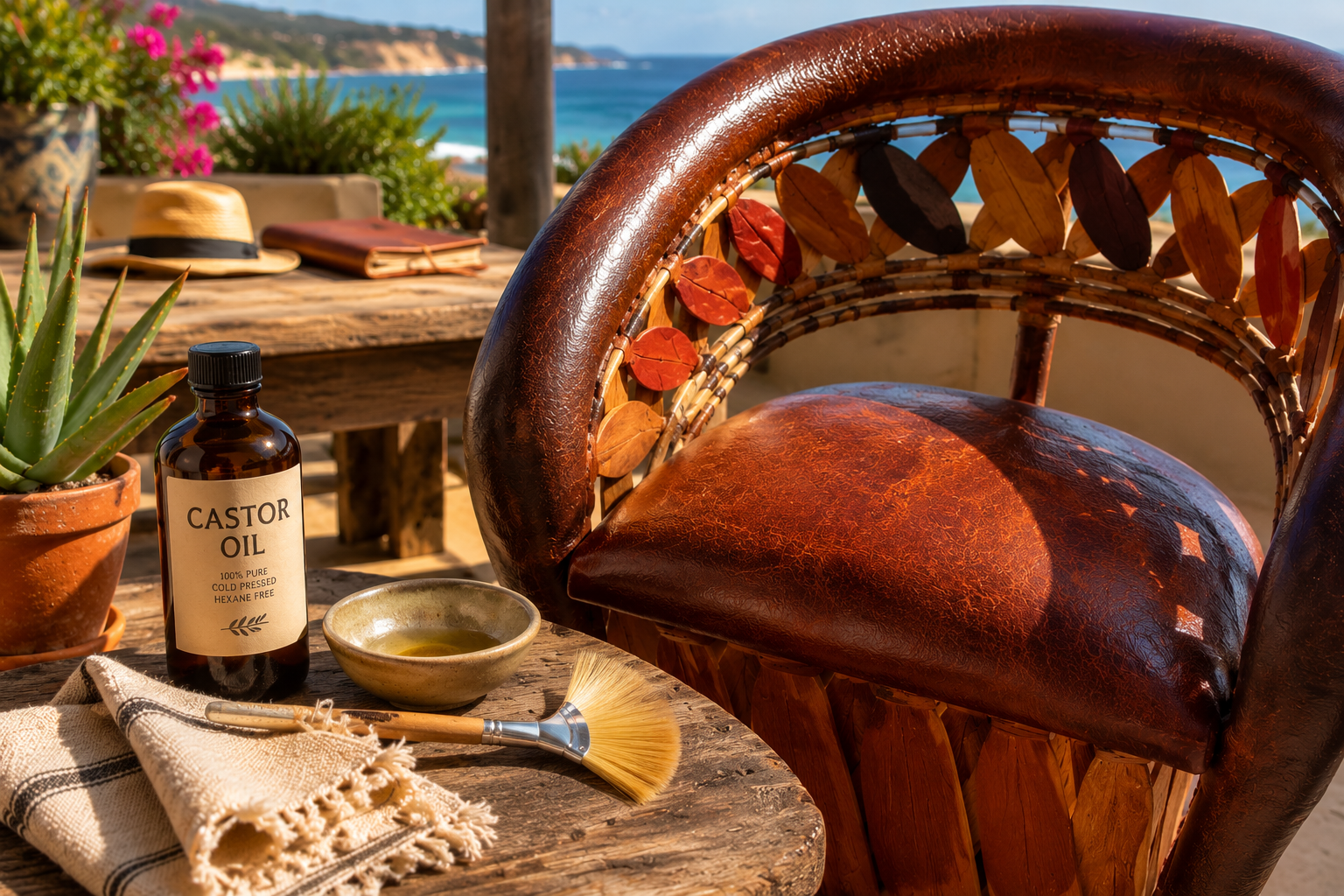
I like using an old paint brush a soft cloth, something clean but not precious. I paint the oil on and let it soak in for about 20 minutes or longer.
After the leather has had time to absorb it, I buff with the clean cloth until the surface feels smooth, not tacky.
If my hand feels oily after touching it, I buff again.
When Castor Oil Is a Good Choice
Castor oil is a good choice when leather looks dry, feels stiff, or needs a little help after sun, dust, and everyday use. It is especially nice for practical leather pieces that do not need to stay a perfect original shade.
Think hardworking boots, well-loved bags, old belts, leather handles, and pieces that already have some character.
For delicate, designer, pale, antique, or sentimental leather, I would be more cautious. Test first, go slowly, and when in doubt, use a product made specifically for that type of leather.
Want More Castor Oil Ideas?
If you like practical, everyday castor oil uses, I go much deeper in my book All About Castor Oil, part of the Nature’s Miracles collection. It includes simple ways to think about castor oil around the home, in body care, and as one of those old-school staples that keeps earning its shelf space.
As an Amazon Associate, we may earn from qualifying purchases, at no extra cost to you.
The Baja Takeaway
Leather can last for years when it gets a little attention. Around here, between the sun, salt air, dust, dogs, and general “where did I put that?” lifestyle, I like simple care that actually fits real life.
Castor oil is one of those useful little things to keep on hand. It is not fancy. It is not complicated. It just helps dry leather feel cared for again when we use it with a light hand.
Clean it first. Use less than you think. Let it absorb. Buff it well.
That is usually the whole magic trick.
And if you accidentally use too much, do what the rest of us do: buff like you mean it, learn something, and pretend it was a leather-conditioning experiment for the blog.
Quick Checklist
Use castor oil only on smooth finished leather.
Test a hidden spot first.
Clean and dry the leather before oiling.
Apply with a paint brush or a soft cloth (whichever you prefer for the job).
Let it absorb, then buff off the excess.
A little castor oil can go a long way. Around here, that is exactly the kind of practical magic we like.